Rob Levy's Portland Real Estate Blog

Rob Levy

Blog

Displaying blog entries 1-10 of 217

FHA Loan Updates

by Rob Levy

On April 1st, the Federal Housing Administration (FHA) raised the annual mortgage insurance premium rates, with its primary goal being to bolster the Mutual Mortgage Insurance Fund (MMI Fund). And there are more substantial changes coming our way this summer, starting June 3rd when the administration increases the required duration time for the entire life of its mortgage insurance.

The yearly premium on the majority of the FHA mortgage loans impacted by the April Fool's Day changes jumped up about 0.10 of a percentage point, which translates into an approximately $100 annual increase for every $100,000 in the amount of the loan.

If the loan is $625,000 or more, and has a term length of 15 years or more, the amount of the loan will increase by only 0.05 of a percentage point, or $50 annually for each $100,000. The premium varies for each loan, depending on the loan's overall amount, length of term and loan-to-value ratio.

FHA-backed mortgage loans have been a popular financing option, especially for folks with relatively low credit scores, and lower down payment amounts.

Beginning on June 3rd, borrowers with a 78 percent loan-to-value ratio will no longer be able to terminate their mortgage insurance payments, leaving open a small window of opportunity for those with a 20 percent or less down payment to take advantage of FHA's current policy.

What this new policy essentially means for borrowers who take out a loan after June 3rd, is that their mortgage insurance will run all the way to the end of the loan's term. Even those who take out a 15-year loan carrying a starting loan-to-value ratio of 78 percent or more can expect to pay mortgage insurance for at least 11 years.

Home buyers planning on living in their new residence for less than 10 years may not feel much of a financial impact from these new mortgage loan changes. Those expecting to plant their family roots at their recently purchased property can consider refinancing options, such as a conventional, mortgage-insurance-free loan, when the equity has risen because of appreciation and amortization.

For all of the details straight from the horses mouth, so to speak, go to HUD.gov, the U.S. Department of Housing and Urban Development's (HUD's) website.

February Home Prices Pick Up in Portland

by Rob Levy

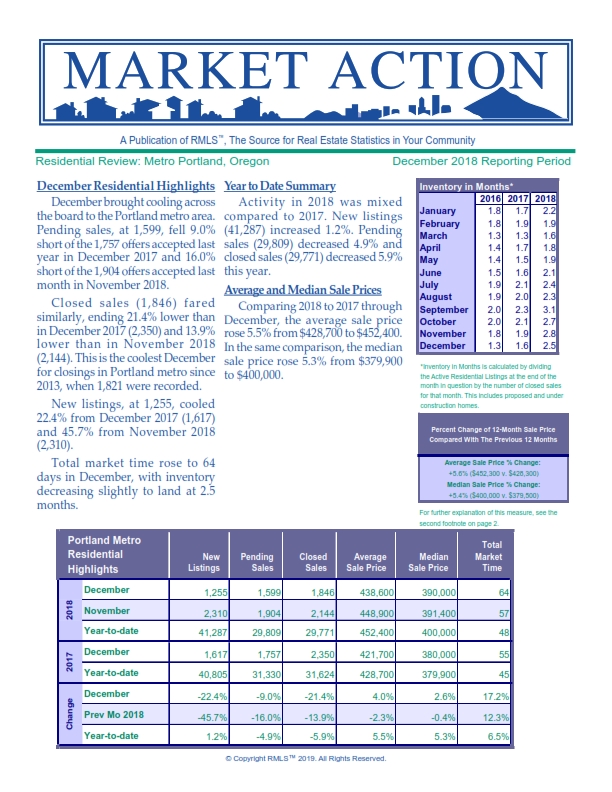
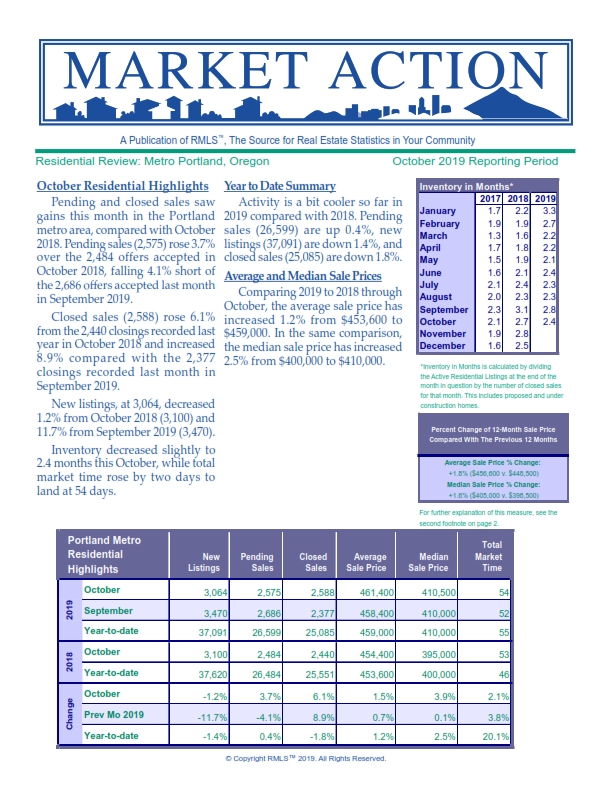
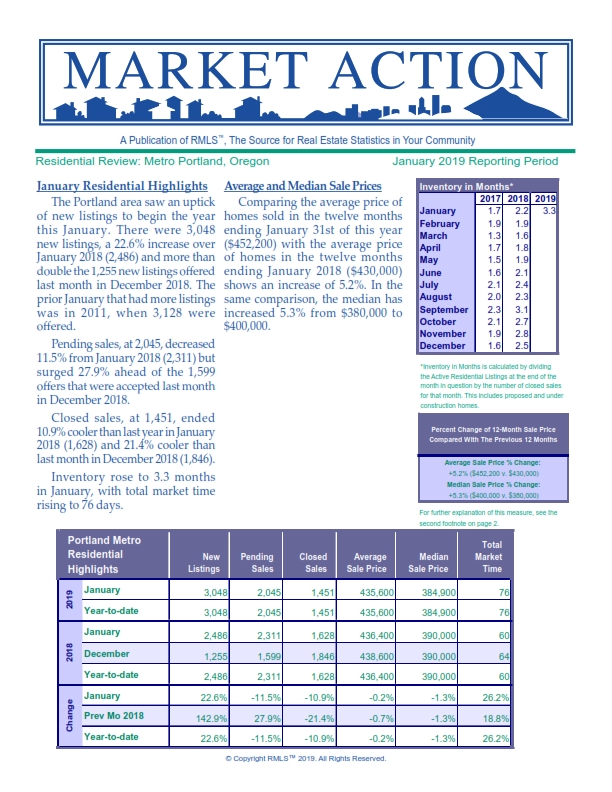
What a difference a year makes! Housing prices in the Rose City are on the rise according to a major housing industry data source.

Portland – like a number of other major U.S. cities – saw home prices rise in February according to the Standard & Poor's/Case-Shiller home price index. In fact, the home-price index witnessed its biggest annual gain since 2006, recording a boost of 9.3 percent in February in the 20 major U.S. metro areas that were surveyed. This is the largest yearly change rate since May 2006.

From 2012 to 2013, Portland prices increased 9.4 percent, and from January to February of this year, home prices in Portland measured an increase of 0.7 percent.

David M. Blitzer, chairman of S&P's index committee noted that, "Home prices continue to show solid increases across all 20 cities."  The fastest home price growth rate occurred in Phoenix where home prices rose 23 percent from 2012 to 2013. San Francisco had an 18.9 percent gain, while Las Vegas registered a rise of 17.6 percent during the same time period. Ten of the 20 cities showed double-digit increases compared to last year.

Back in February 2012, Case-Shiller reported an overall post-recession low, with home prices down at that point just over 35 percent from their high mark. Locally, Portland’s low-price moment came in March of 2012, with home prices down 28.7 percent from their peak.

Now, just over a year later, home prices have recovered at an impressive rate, in part because home inventories are low. The inventory situation stems from the fact that many homeowners are still carrying mortgage debt that prevents them from selling; at the same time, new construction has slowed significantly. A goodly number of homes continue to work their way through the foreclosure process, or are simply sitting in lenders' portfolios.

What is the impact of small home inventories? Well, for one thing, limited inventories have propelled buyers who want to take advantage of low interest rates and prices into bidding wars – and this in turn has pushed prices upwards. As traditional home sales have increased, the percentage of foreclosures in terms of overall transaction volume has declined, and this also plays a role in rising home prices.

Of course, talking about “the housing market in Portland” is too broad, and like all larger cities, the market is comprised of sub-markets. Homes in the lowest price ranges have recorded the biggest gains. The Rose City’s least expensive one-third of residential properties have gained 15 percent in price over 2012. Homes in the middle price range have risen by 11 percent, and the most expensive one-third of homes have increased by only 7 percent. Homes in the highest-priced segment really struggled through the recession and failed to recover as much ground compared with other segments.

A recent article in the Oregonian turned to Portland real estate veteran Rob Levy for insight. "The exciting thing we're seeing is that some of the most expensive homes are starting to sell. The starter homes are selling, and the homeowners are buying the middle homes, and they're buying the luxury homes. That's the piece that was missing until now."

The rapid rate of home price increases have left certain economists and real estate professionals concerned that bubble conditions could be starting again. However, there are conditions that may keep home prices from increasing too quickly. For instance, the Federal Reserve is expected to keep interest rates low until the national employment numbers improve measurably – but when rates rise, demand is likely to decrease. Also, as prices rise, more homeowners will realize equity gains that will allow them to sell, so homebuilding activity should gather steam.

Many housing economists anticipate that home-price gains will begin to cool in coming months. The Oregonian article once again turned to Rob Levy, who said appreciation settled at an annual rate of 4 percent would be a welcome change. "Four percent is a good number, a good, steady, stable number," he said. That's always been the safe number. It's not nuts."

All in all, the news is good for the Portland home market. Fears of a new bubble appear unfounded, and a reasonable rate of increase in home prices indicates, hopefully, a fairly healthy housing market overall for Portland.

Real Estate is Back!

by Rob Levy

Real estate is BACK and nothing says it better than this graphic!

Data provided by

Down Payments by State: How They Affect You

by Rob Levy


When you are considering buying a home, a huge factor you need to consider is the down payment. The times of no down payment loans are long gone, and when you put hard money on a loan, it is very important to know what it means for you. Our friends at the lending tree conducted a study (map below), and they calculated the average down payment of each state. As you can see, average rates are very close together, Oregon being the lowest in the entire region! What that means for the buyer, is that lending standards are becoming more tight. Which in turn enables the buyer to be in more commited discussions when they are pushing out the details of the loan, because banks have a much smaller risk of "losing the farm" in case of foreclosure. Overall, this is great news for the real estate economy as a whole. The great thing about this, coupled with the trend of the real estate market (see 2012, a year in review here), all systems are go, and we are ready to hit the new year along side you with force! If we can help in any way, please don't hesitate to give us a call and we will help you any way we can! 
(to keep up with all market updates and what may be coming available in your area, go to Roblevy.com and click on the gray button titled 'newsletter'. Also, don't forget to 'like' our Facebook page at The Rob Levy Team!)


When you are considering buying a home, a huge factor you need to consider is the down payment. The times of no down payment loans are long gone, and when you put hard money on a loan, it is very important to know what it means for you. Our friends at the lending tree conducted a study (map below), and they calculated the average down payment of each state. As you can see, average rates are very close together, Oregon being the lowest in the entire region!

What that means for the buyer, is that lending standards are becoming more tight. Which in turn enables the buyer to be in more commited discussions when they are pushing out the details of the loan, because banks have a much smaller risk of "losing the farm" in case of foreclosure.

Overall, this is great news for the real estate economy as a whole. The great thing about this, coupled with the trend of the real estate market (see 2012, a year in review here), all systems are go, and we are ready to hit the new year along side you with force! If we can help in any way, please don't hesitate to give us a call and we will help you any way we can! 


(to keep up with all market updates and what may be coming available in your area, go to Roblevy.com and click on the gray button titled 'newsletter'. Also, don't forget to 'like' our Facebook page at www.facebook.com/theroblevyteam)!


2012, a year in review

by Rob Levy


In light of the market heating up, I just wanted to take a moment and review the year that was 2012, and how it may or may not impact you in 2013....
Another year has went by, and what a year it was! There were 32,000 new listings in 2012, a number that actually dropped by 5% from the 2011 number. Despite what you may have heard, the sales actually closed in 2012 went UP 19.1%, from 19,682 sales to 23,438. That spike in closed sales lead to a 16.2% increase in pending sales as well. In a market that is said to "not do well" the average sale price most likely will drop, which may, bring the pending and closed sales up for the year. What is great about the market in 2012, is not only did the amount of sales increase, but the PRICE of the average listing increased by 4.4%. Going from $221,000 to $235,000!! That is a great sign for things to come. In fact, there were increases across the board. Median sales price went up (6.3% increase), as well as time on the market, dropping a staggering 21.5%, from 143 days last year to 112 days in 2012! So not only are more homes selling for a higher amount, but they are selling even FASTER! This set up for a very nice increase in the total volume of sales. Which increased to $6.45 billion, from the $5.2 billion in 2011. 
If you need any help interpreting this data, or what this data means for you or your family, please don't hesitate to call us and we will be more than happy to help. 2013 is setting up to be a fantastic year, and we at the Rob Levy team are VERY excited to share it with you! 
(to keep up with all market updates and what may be coming available in your area, go to Roblevy.com and click on the gray button titled 'newsletter'. Also, don't forget to 'like' our Facebook page at The Rob Levy Team!)


In light of the market heating up, I just wanted to take a moment and review the year that was 2012, and how it may or may not impact you in 2013....


Another year has went by, and what a year it was! There were 32,000 new listings in 2012, a number that actually dropped by 5% from the 2011 number. Despite what you may have heard, the sales actually closed in 2012 went UP 19.1%, from 19,682 sales to 23,438. That spike in closed sales lead to a 16.2% increase in pending sales as well. In a market that is said to "not do well" the average sale price most likely will drop, which may, bring the pending and closed sales up for the year. What is great about the market in 2012, is not only did the amount of sales increase, but the PRICE of the average listing increased by 4.4%. Going from $221,000 to $235,000!! That is a great sign for things to come. In fact, there were increases across the board. Median sales price went up (6.3% increase), as well as time on the market, dropping a staggering 21.5%, from 143 days last year to 112 days in 2012! So not only are more homes selling for a higher amount, but they are selling even FASTER! This set up for a very nice increase in the total volume of sales. Which increased to $6.45 billion, from the $5.2 billion in 2011.  If you need any help interpreting this data, or what this data means for you or your family, please don't hesitate to call us and we will be more than happy to help. 2013 is setting up to be a fantastic year, and we at the Rob Levy team are VERY excited to share it with you! 


(to keep up with all market updates and what may be coming available in your area, go to Roblevy.com and click on the gray button titled 'newsletter'. Also, don't forget to 'like' our Facebook page at www.facebook.com/theroblevyteam)!

Nice Portland article in UK newspaper

by Rob Levy

Here is a nice article on Portland and Oregon from the Guardian Newspaper in the UK.  Its a good read!  http://www.guardian.co.uk/travel/2012/sep/14/portland-oregon-pacific-coast-road-trip

August Market Update

by Rob Levy

Check out my new chart below, I am now showing average and median sales price changes.  All areas of real estate activity are positive when comparing July 2012 with July 2011. There were 2,372 accepted offers, 23% more than the 1,928 reported in July 2011 although down slightly (-2.6%) from last month. The 1,973 closed sales represent a 15.4% increase over the same month last year, when 1,709 were recorded. This represents the highest numberof closed sales in the month of July since 2009.

New listings rose 7.5% from 2,942 to 3,162 when comparing July 2011 to July 2012 but were down slightly (-1.4%) from the previous month.  Overall real estate activity is positive when comparing July 2012 to the same month last year but down slightly from the previous month. We’ve seen a similar pattern in prior years with activity dropping in July from June highs.The unsold inventory in months ticked up slightly from 3.9 in June to 4.6 in July and is lower than any July since 2006. It would take only 4.6 months to sell the 9,041 active listings at the July rate of sales.

Home sale price measures were all positive in July. The median sales price rose 7.8% when comparing July 2012 with the same month in 2011 and 1.2% when comparing it to the previous month. When comparing the percent change of the last 12 months with the previous 12 months we see a 0.7% gain in the median price.

Inventory becomes scarce in Portland, OR

by Rob Levy

An article published today on MSNBC now rates Portland, Oregon #2 on the list of "Ten major housing markets with the shortest supply of homes".

The Rob Levy team has noticed inventory dropping a lot, especially in close in areas of SW, NW, NE and SE Portland, but its also spreading out to other areas as well priced homes in good conditon in Beaverton and other western suburbs are also hot right now.   The key is having your home "show ready", meaning not cluttered, nice and clean and ready for showing anytime.  

Check out the article, its interesting to see what other parts of the country are also low on inventory.

Short Sales Surpass Bank Sales First Time Ever

by Rob Levy
For the first time ever, according to Bloomberg short sales have surpassed bank owned (REO) sales for the first time ever. It seems banks have come to realize they can make more money on a short sale than going through the entire foreclosure process. (see link to article at http://tinyurl.com/7mt7f82 ) For home sellers this is a good thing because a short sale has a far less detrimental effect on their credit report, making life a lot easier sooner. The Rob Levy Team is well versed in short sales whether representing a buyer or a seller. Much of our business is short sale related, and we have taken many classes to always be up to date on the latest trends in getting the deals through. If you have any questions regarding a short sale - whether that be buying one or selling one - please contact us today!

Urban Land institute releases report

by Rob Levy

There was a fascinating article jsut released from the urban land institute about the future of housing in the United States, leaning towards the future - what will sell, what wont and where the needs are.  Conributing factors such as aging boomers, echo boomers buying etc. It points to a growing need for rental houses as well as handicap accessible houses etc.
http://www.urban.org/UploadedPDF/412520-Demographic-Challenges-and-Opportunities-for-US-Housing-Markets.pdf

Displaying blog entries 1-10 of 217